- You are here:
- Home

- Join Us
- Memberships
- Annual Membership £100
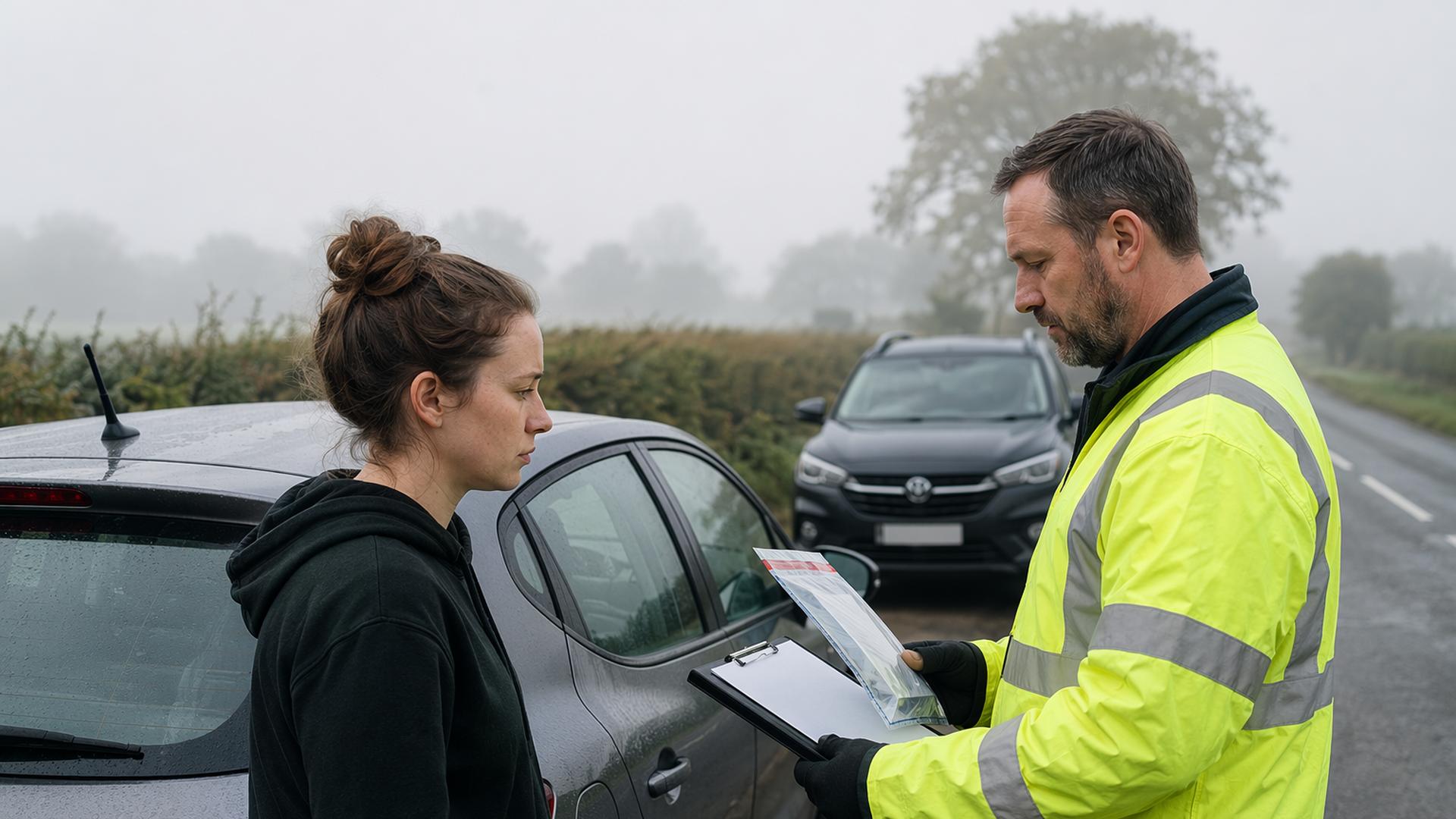
7 Consequences of Failing a Roadside Drug Test in the UK Explained
Published by Drug Driving Solicitors — specialist defence lawyers for drug driving charges across England and Wales.
Failing a roadside drug test is a stressful and disorienting experience, and for many people it marks the beginning of a legal process they know very little about. Understanding what happens at each stage — from the moment an officer asks you to provide a sample to the point at which your case is resolved — can make a significant difference to how you respond, what decisions you make, and ultimately what outcome you achieve.
This article walks through the seven key stages that follow a failed roadside drug test in England and Wales. They are presented here to give drivers a clear, honest picture of the process, written in plain language without sacrificing accuracy. Whether you have already been through some of these stages or you are preparing for what lies ahead, this guide is designed to help you make sense of the road in front of you.
1. The Roadside Device Produces a Positive Reading
What the Screening Device Actually Does
The first formal step in a drug driving investigation occurs when a police officer uses a roadside drug screening device to test a sample of your saliva. The device most commonly used in England and Wales is the Dräger DrugTest 5000, which is type-approved by the Home Office for detecting cannabis and cocaine. Some forces also use the Securetec DrugWipe, which tests for a broader range of substances. These devices do not confirm drug driving on their own — they screen for the presence of certain drug groups and indicate whether further investigation is warranted.
What a Positive Reading Means in Practice
A positive reading on the roadside device does not establish criminal liability. It means the device has detected a substance above its internal threshold for that drug category, triggering the next stage of the process. It is worth noting that these devices are calibrated to indicate the presence of a drug, not to measure precisely whether you are above or below the legal limit. That measurement is carried out later by a laboratory. A positive screening result is therefore the beginning of the investigation, not the conclusion of it.
Common Reasons for a Positive Screening Result
There are several reasons a device might return a positive reading, and not all of them are straightforward. Recent use of a controlled drug is the most obvious, but passive exposure, timing of use, and the sensitivity of the device can all be relevant factors. Additionally, the device must be used correctly and must be in date and type-approved for the specific substance it detects.
- The device must be type-approved for the specific drug group being tested
- The officer must follow the manufacturer's instructions for use
- Environmental factors and recent oral hygiene products can occasionally affect results
- A positive reading for one drug category does not mean all substances have been detected
Why This Stage Matters for Your Defence
Because the roadside device only screens for certain drugs, cases involving substances outside those categories — including many prescription medications and some controlled drugs — cannot be detected at this stage. A specialist solicitor will examine whether the correct device was used, whether it was operated properly, and whether any procedural failures at this stage could affect the admissibility of subsequent evidence.
2. The Officer Administers a Statutory Warning
The Legal Basis for the Statutory Warning
Before an officer can require you to provide a preliminary oral fluid sample using the roadside device, they are required by law to administer a statutory warning. This requirement exists under the Road Traffic Act 1988 and the accompanying regulations, and it is not a formality — it is a legally significant step. The warning informs you that it is an offence to fail to cooperate with the test and sets out the legal framework under which you are being asked to provide a sample. Officers are trained to administer this warning in a specific way and at the correct point in the interaction.
What the Warning Must Include
The statutory warning must be given before the requirement to provide a sample is made. It must be intelligible to you in the circumstances — for example, if there is reason to believe you do not understand English, steps should be taken to ensure comprehension. The warning is not merely advisory. It creates a legal obligation on your part and, if you fail to comply without a reasonable excuse, you commit a separate offence.
The Consequences of Failing to Administer It Correctly
This is an area where procedural error can have significant consequences for the prosecution case. If the statutory warning is not given, or is given after the requirement to provide a sample rather than before, the sample requirement may be unlawful. Evidence obtained following an unlawful requirement can be challenged, and in some cases, courts have found that such failures are fatal to the prosecution.
- The warning must be given before, not after, the requirement to provide a sample
- The warning must be in a form the driver can reasonably understand
- Failure to administer the warning correctly can render the subsequent test unlawful
- Body worn camera footage is often key evidence when reviewing whether the warning was given properly
Why This Step Is Often Overlooked
Many drivers who are arrested and charged never question whether the statutory warning was given correctly, because it happens quickly and in a high-pressure situation. A specialist defence solicitor will routinely request all footage, custody records, and officer notes to verify that this step was carried out lawfully. In practice, it is one of the most productive areas of procedural review.
3. You Are Arrested and Taken to a Custody Suite
What Happens at the Point of Arrest
If the roadside device returns a positive reading, or if an officer has reasonable grounds to suspect drug driving even without a positive screening result, you will be arrested under Section 5A or Section 4 of the Road Traffic Act 1988. You will be informed of the grounds for your arrest, cautioned, and transported to a police custody suite. Your vehicle will typically be left at the roadside or recovered, depending on the circumstances. At the custody suite, you will be booked in by a custody sergeant, who will explain your rights and the reasons for your detention.
Your Rights in Custody
Once in custody, you have the right to free and independent legal advice before being questioned or required to provide any further samples. This right is important and should not be waived. A duty solicitor is available at no cost, but for a drug driving case, speaking to a specialist who understands the precise legal and scientific issues involved is strongly advisable. You also have the right to have someone informed of your arrest, and the right to consult the Codes of Practice under the Police and Criminal Evidence Act 1984.
What the Custody Process Involves
At the custody suite, the custody sergeant will authorise your detention and the investigation will continue. A healthcare professional — either a force medical examiner or a registered nurse — will be called to conduct a medical assessment and to take a blood sample. You may also be required to participate in a field impairment assessment, which consists of a series of physical and cognitive tests designed to detect signs of drug-related impairment.
- You have the right to free legal advice before any samples are taken
- A healthcare professional, not the arresting officer, will take the blood sample
- A field impairment assessment may be conducted alongside the blood test
- Everything you say in custody can be used in evidence
The Importance of Legal Advice at This Stage
The decisions you make in custody can affect the outcome of your case significantly. Requesting legal advice, understanding what you are and are not required to do, and knowing your rights in relation to the blood sample are all matters where early specialist input is valuable. A solicitor can also advise you on whether to answer questions in interview or whether to exercise your right to silence.
4. A Healthcare Professional Takes a Blood Sample
Who Takes the Sample and Why
The blood sample in a drug driving investigation is not taken by the arresting officer. It must be taken by a healthcare professional, typically a force medical examiner or a registered nurse, who attends the custody suite for this purpose. This requirement exists to ensure that the sample is collected in a medically appropriate way and that the process meets the evidential standards required by law. The healthcare professional will also assess your fitness to be detained and to provide a specimen.
The Two-Part Sample Procedure
The blood sample is divided into two parts. One part is retained by the police and sent for laboratory analysis. The other part is offered to you, the suspect. You are entitled to take your portion of the sample away and have it independently analysed by a laboratory of your choice. This is a right that many drivers are unaware of, and it is one that can be highly significant in building a defence. Your solicitor can arrange independent analysis of your sample if you choose to retain it.
What Happens If You Refuse
Refusing to provide a blood sample without a reasonable excuse is a criminal offence in its own right under Section 7A of the Road Traffic Act 1988. It carries the same penalty range as a drug driving conviction, including a mandatory minimum 12-month driving ban. A medical reason for refusal must be supported by evidence and assessed by the healthcare professional. This is not an area where a general reluctance to provide a sample will be accepted as an excuse.
- The sample must be taken by a healthcare professional, not a police officer
- You have a legal right to receive your portion of the divided sample
- Independent analysis of your portion can be arranged through a specialist solicitor
- Refusing without a lawful excuse is a separate criminal offence
Procedural Safeguards Around the Sample
There are strict procedural requirements governing how the blood sample is taken, divided, labelled, stored, and transferred. Any deviation from these requirements can affect the reliability or admissibility of the sample. A specialist solicitor will request the full chain of custody documentation as a matter of course and will scrutinise each step of the handling process.
5. The Blood Sample Is Sent for Laboratory Analysis
How the Laboratory Process Works
Once the blood sample has been taken and labelled, the police portion is packaged and sent to a forensic laboratory nominated by the police force. The laboratory conducts a detailed quantitative analysis to determine whether any controlled drugs are present in the sample and, if so, at what concentration. The results are measured in micrograms per litre of blood and compared against the specified limits set out in the Drug Driving (Specified Limits) (England and Wales) Regulations 2014.
How Long Analysis Takes
Laboratory analysis is typically the longest stage of the entire process. Depending on the nominated laboratory and its current case volume, the process can take anywhere from several weeks to several months. This is one of the main reasons why the overall timeline from failing a roadside test to receiving a charging decision can stretch to between two and six months, and sometimes longer. During this period, you may hear nothing from the police, which can be unsettling but is not unusual.
What the Laboratory Report Contains
The laboratory report will set out the drugs detected, the concentration of each drug in your blood, the analytical method used, and the scientist's professional opinion on the findings. It is a technical document and forms the cornerstone of the prosecution's scientific evidence. Your solicitor will obtain a copy of the report and may instruct an independent expert to review the methodology and conclusions.
- The legal limits for specific drugs are set by statutory instrument and vary by substance
- Cannabis (delta-9-THC) has a specified limit of 2 micrograms per litre of blood
- Cocaine has a specified limit of 10 micrograms per litre of blood
- Prescription drugs such as clonazepam and morphine also have specified limits under the regulations
The Value of Independent Scientific Review
Laboratory analysis is not infallible. Errors in calibration, sample contamination, incorrect identification of metabolites, and transcription mistakes can all affect the reported concentration. An independent toxicologist instructed by your solicitor can review the laboratory methodology, verify the reported figures, and identify any analytical issues that may weaken the prosecution's case.
6. You Are Charged or Told No Further Action Will Be Taken
How the Charging Decision Is Made
Once the laboratory report is received, the case file is reviewed by a decision-maker — either a police officer or a Crown Prosecution Service lawyer, depending on the charging threshold that applies. The decision-maker considers the laboratory results, the evidence gathered at the roadside and in custody, and any other relevant factors. If the evidence meets the required threshold for a realistic prospect of conviction and it is in the public interest to prosecute, you will be charged. If not, you will be told that no further action will be taken.
What Being Charged Means
Being charged means that the case will proceed to court. You will typically be given a date to appear at the magistrates' court, or the charge will be sent to you by post if you were released on pre-charge bail. At this point, if you have not already instructed a solicitor, it is important to do so promptly. You will need to decide how to plead, understand the likely range of outcomes, and begin preparing your case. A guilty plea entered at the earliest opportunity attracts credit from the court, but it should only be entered if it is the right decision for your case.
What No Further Action Means
If the decision is no further action, it means the police or CPS have concluded there is insufficient evidence to charge you, or that it is not in the public interest to do so. This does not necessarily mean the investigation found no drug in your blood — it may mean the concentration was below the specified limit, that the evidence had procedural deficiencies, or that another factor prevented a charge being brought. A no further action outcome is not a formal acquittal, but in practical terms it ends the investigation.
- The charging threshold requires a realistic prospect of conviction and public interest in prosecution
- You should instruct a specialist solicitor before entering any plea
- A guilty plea at the first hearing attracts the maximum one-third sentencing discount
- A no further action decision ends the investigation without a criminal charge
What to Do While Waiting for a Decision
The waiting period between providing the blood sample and receiving a charging decision can be lengthy and anxiety-inducing. It is worth using this time productively by consulting a solicitor, gathering any relevant documentation such as prescription records, and if appropriate, arranging independent analysis of your portion of the blood sample.
7. Your Case Is Heard at the Magistrates' Court
Where Drug Driving Cases Are Decided
The overwhelming majority of drug driving cases are heard at the magistrates' court, which has jurisdiction over summary offences including the standard Section 5A charge of driving with a controlled drug above the specified limit. The case will be heard by a bench of lay magistrates or, in some courts, a district judge sitting alone. You will have the opportunity to enter a plea, and if you plead not guilty, a trial date will be set at which the prosecution will be required to prove its case beyond reasonable doubt.
The Sentencing Range for a Drug Driving Conviction
If convicted, whether following a guilty plea or after a trial, the court will impose sentence. A Section 5A drug driving offence carries a mandatory minimum 12-month driving disqualification, which cannot be reduced by the court. In addition, the court can impose a fine, community order, or in more serious cases, a custodial sentence of up to six months. The court will consider factors including prior convictions, the degree of culpability, and any personal mitigation when determining the appropriate sentence within the available range.
The Wider Consequences of Conviction
Beyond the sentence imposed by the court, a drug driving conviction carries a number of significant collateral consequences that are worth understanding in advance. A DG10 endorsement will be recorded on your driving licence for 11 years, which is visible to insurers and will typically result in a substantial increase in insurance premiums. A conviction may also affect employment, particularly in roles that require a clean driving licence or involve working with children or vulnerable adults. Travel to some countries, including the United States, Canada, and Australia, can be complicated by a criminal conviction.
- The mandatory minimum disqualification is 12 months and cannot be avoided on conviction
- A DG10 endorsement stays on your licence for 11 years from the date of conviction
- Sentencing is affected by aggravating and mitigating factors presented at court
- A specialist solicitor can ensure all available mitigation is placed before the court
The Importance of Specialist Representation at Court
Drug driving cases often turn on technical scientific and procedural issues that require specialist knowledge to argue effectively. A solicitor with specific expertise in drug driving defence will be familiar with the forensic science, the relevant case law, and the procedural requirements that the prosecution must satisfy. Instructing a generalist solicitor for a drug driving case is a risk that is rarely worth taking when specialist representation is available.
What This All Means for You
Failing a roadside drug test is not the end of the road, and it is certainly not the moment at which your case is decided. The process that follows is governed by detailed legal and scientific requirements at every stage, and procedural or evidential failings at any one of those stages can have a material impact on the outcome of your case. Understanding the process, taking early specialist legal advice, and making informed decisions at each step are the three things that make the greatest difference to the people who come through it with the best possible result.
Frequently Asked Questions
How Long Does It Take from Failing a Roadside Drug Test to Being Charged?
The timeline from a failed roadside test to a charging decision typically falls somewhere between two and six months, though in some cases it can take longer. The main source of delay is the forensic laboratory analysis of the blood sample, which varies depending on the nominated laboratory and how busy it is at the time. Once the laboratory report is received, the charging decision tends to follow relatively quickly. If six months have passed since the incident and you have not received any communication, it is worth seeking specialist legal advice to clarify your position.
What Happens If I Refuse to Give a Blood Sample at the Custody Suite?
Refusing to provide a specimen without a lawful excuse is itself a criminal offence under Section 7A of the Road Traffic Act 1988, and it carries the same sentencing range as a drug driving conviction — including the mandatory 12-month disqualification. The range of acceptable excuses is very narrow, and a medical reason must be supported by evidence assessed by the healthcare professional. You should never refuse to provide a sample without first speaking to a solicitor.
Will a Drug Driving Conviction Show Up on a DBS Check?
Yes. A drug driving conviction is a criminal conviction and will be disclosed on a standard or enhanced Disclosure and Barring Service check for the duration that the conviction remains on record. For most adults, this is determined by the Rehabilitation of Offenders Act 1974 and the DBS filtering rules. If you work in, or are applying for a role in, education, healthcare, social work, or any other regulated sector, a drug driving conviction can have serious professional consequences. A specialist solicitor can advise on the specific implications for your employment situation before you decide how to plead.
What If the Drug Found in My Blood Was Prescribed by My Doctor?
A statutory medical defence is available under Section 5A(3) of the Road Traffic Act 1988 for drivers who can demonstrate that the drug was prescribed or supplied to them, that they took it in accordance with medical advice, and that their driving was not impaired at the time. The defence is recognised in law but it is narrower in practice than many people assume. It must be properly evidenced and presented, and it is not simply a matter of producing a prescription. Drug Driving Solicitors has specific experience in handling prescription medication drug driving cases and can advise on whether the defence is available in your circumstances.
What Is a DG10 and How Long Does It Stay on My Licence?
DG10 is the DVLA offence code for driving or attempting to drive with a controlled drug above the specified limit, which is the standard Section 5A offence. It is recorded on your driving licence for 11 years from the date of conviction and will be visible to any insurer who runs a DVLA database check. The practical consequence is that insurance premiums typically increase significantly following a DG10 endorsement, and in some cases specialist or non-standard insurance may be required. A specialist solicitor can advise you on the full implications of a DG10 for your specific circumstances, including the effect on your employment and your ability to travel internationally.
What Are the Most Common Reasons Drug Driving Charges Are Dropped?
The grounds on which drug driving charges are most frequently discontinued or defeated include: failure to administer the statutory warning correctly before requiring the roadside sample; use of a device not type-approved for the drug in question; deficiencies in the blood sample chain of custody; failure to offer the defendant their portion of the divided blood sample; errors in the laboratory analysis process; and an unlawful stop or search. A specialist solicitor will review all of these issues as a matter of routine, rather than focusing solely on the headline blood test result. Early instruction gives the solicitor more time to identify and pursue these arguments.
Drug Driving Solicitors is a dedicated law firm representing clients in drug driving cases throughout England and Wales. If you have failed a roadside drug test and want to understand where you stand, contact us today for a free initial consultation or visit drugdrivingsolicitors.co.uk. Taking advice at the earliest stage is free of charge, and it can make a genuine difference to how your case ends.